System leadership: “PostBus will play a permanent role as a point of contact”
PostBus is realigning its role as a systems leader and taking on additional operational tasks in the different regions. In this interview, Jonathan Zimmerli (Head of CTES executive office at the Federal Office of Transport) explains why the Confederation has updated the ordinances that form the basis for system leadership. Stefan Mühlemann (specialist in emergency and crisis management) explains why the PostBus regions are taking on new tasks.
Rich Content Section
The Confederation has revised two ordinances that form the basis for our work as a systems leader. What were the main reasons for this?
Jonathan Zimmerli: Previously, the issue of system leadership was fragmented and governed by two ordinances, one for the Armed Forces and one for the FOT. The Confederation sought to standardize the system and streamline it within a single ordinance. The old ordinances did not cover all modes of transport − aviation, road-based goods transport, cable cars and ships were missing. However, all of these sectors were heavily affected during the pandemic. Furthermore, the systems leaders SBB, PostBus and the Swiss Federal Roads Office (FEDRO) were listed in the old ordinances, but their tasks were not clearly defined. The tasks are now set out in detail – at a high level in the ordinance and more concretely in the specifications documents. These also determine the remuneration paid for the tasks.

During the coronavirus pandemic and in preparation for a possible electricity shortage, PostBus and SBB took on systems leader tasks. What insights has the Confederation gained from this?
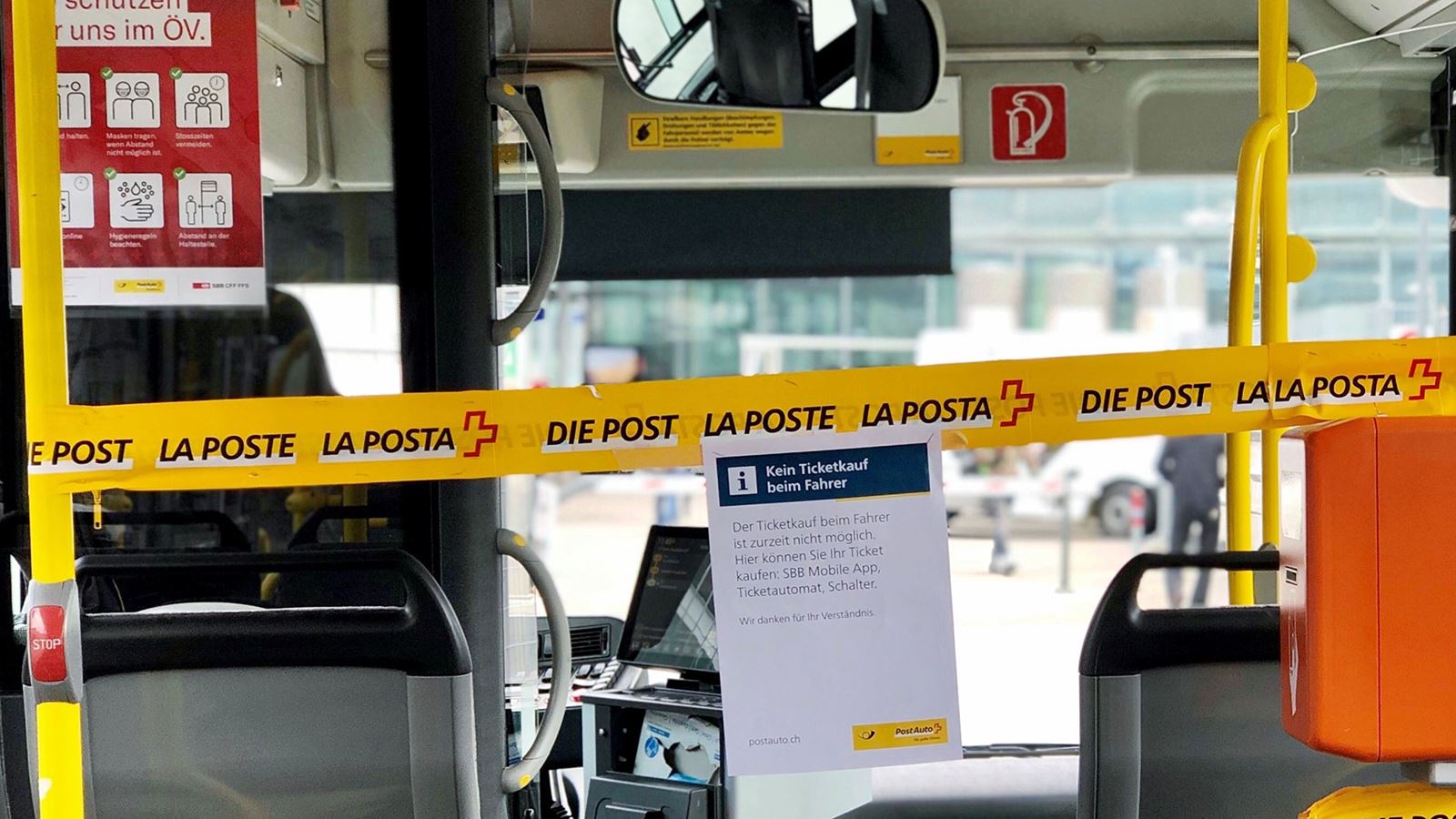
Jonathan Zimmerli: System leadership is a crisis system that was developed around 20 years ago. During the pandemic, it became clear that this system was working and that it could continue in its current form. We were also vindicated in our view that the transport sector needs uniform national rules during crisis situations, instead of a range of independent cantonal solutions. We will ensure that transport is managed consistently at national level in the future.
Rich Content Section
What does the Confederation expect from PostBus in the future as an organization responsible for system leadership? To what extent has the Confederation amended the relevant specifications document?
Jonathan Zimmerli: The most important thing is ongoing discussion about the issue. The aim is for PostBus to take on a permanent role as a point of contact for other transport companies. This was lacking beforehand. There may have been some exercises and events, but the work as systems leader remained sporadic. Secondly, PostBus will become a competence center for its stakeholders (road-based public transport companies, cable cars and ships). This means that the transport companies know they can contact PostBus if they have any questions about the topic.
In exceptional situations, PostBus has to handle system leadership tasks. What kind of exceptional situations could arise?
Stefan Mühlemann: There is a federal list of possible threats to transport infrastructure or modes of transport. These include electricity shortages, power outages or the failure of the communication network. In our work, however, we will prioritize the potential threats we will focus on first. This is the first step of the 2024 General Emergency Exercise in the North Region.
The Confederation has amended the legal basis for system leadership. What are the most important new tasks for us? Or rather, which aspects of our work will change?
Stefan Mühlemann: During the coronavirus pandemic, PostBus’s SysKo was primarily tasked with passing on information to other transport companies and cantons in a coordinated manner, as well as coordinating the timetable change and customer information. This was, above all, a strategic task that was carried out in a centralized manner. In future, we will also take charge of operational system leadership in the different regions during exceptional situations and, in doing so, respond to cantonal needs. The preparation phase will involve drawing up the emergency plans.

But is there a need to build up this expertise first?
Stefan Mühlemann: That’s exactly what we’re dealing with now. Each region requires a security coordinator who is responsible for system leadership. The security coordinator has overall responsibility for system leadership within their region. They are supported by the liaison staff. For each canton, we have to appoint a liaison, who will then sit on the relevant cantonal crisis management committees. The security coordinator is also the first point of contact for all enquiries relating to system leadership. These may be questions from PostBus employees, but also from other transport companies and the cantons.
Rich Content Section
The PostBus crisis management committee and system leadership already exist. What’s new now?
Stefan Mühlemann: We have had a lot of experience with SysKo at strategic level, and now we’re adding an operational element in the different regions. It is essential that we institutionalize system leadership in each of the regions. This is the biggest game-changer that we are now tackling.
Are we well positioned for the future in the field of system leadership?
Stefan Mühlemann: PostBus has highly committed employees with a great deal of specialist knowledge. This has been demonstrated in SysKo and in emergency and crisis management, and we can build on this. We will now institutionalize the operational aspect of system leadership in the different regions, and I am confident that we will implement this effectively. The initial feedback from the regions has been positive, and our colleagues welcome the fact that this makes system leadership more tangible in their regions. Consider, for example, the densely populated North Region, with critical infrastructure such as nuclear power plants.
Specifications document for PostBus: the Ordinance on the Coordination of Transport in the event of Disasters and Emergencies (CTIO) and the Ordinance on Priority Transport in Exceptional Situations were replaced by the Ordinance on the Coordination of Transport in Exceptional Situations (CTESO) on 1 August 2024. The CTESO specifies the tasks assigned to the systems leaders. On this basis, PostBus and the FOT jointly drew up the specifications (agreement between the FOT and PA) that govern the work during the preparatory phase.