AmiGo technology, AmiGo
This is the technology behind AmiGo
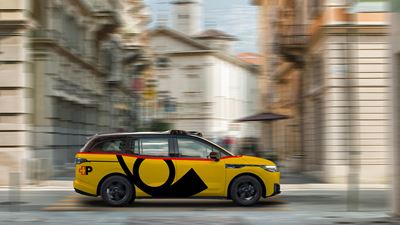
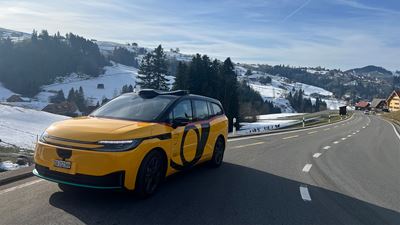
The AmiGo vehicles are eye-catching and not just because of their yellow colour and the post horn. Its state-of-the-art sensors – consisting of cameras, radar and LiDAR sensors – are inconspicuously integrated into the vehicle design. This makes the vehicles look familiar and suitable for everyday use.
Rich Content Section

The AmiGo vehicles record their surroundings using a combination of camera, radar, LiDAR and ultrasonic sensors. Thanks to the strengths of the various sensors, “sensor fusion” produces a precise overall picture of the traffic situation: cameras recognize visual details such as traffic signs or traffic lights, radars reliably measure distances and speeds – even in difficult weather conditions – and LiDAR sensors create high-resolution 3D models of the environment.
All sensor data is processed directly in the vehicle in real time. Powerful on-board computers analyse the movements of vehicles, people and obstacles and make safe driving decisions based on this. This means that the system remains fully functional, even in tunnels or underground garages.
The algorithms are trained with extensive tests and simulations. In traffic, the vehicle uses these models to react in a rule-compliant and forward-looking manner.
First, testing is carried out under controlled conditions
Before AmiGo hits the road, the entire deployment area is carefully examined. The planned routes are covered on test sites and in public spaces and analysed in detail. This ensures that all requirements for safe operation are met.
Rare and challenging situations – such as the sudden emergence of obstacles — are simulated on cordoned-off terrain. These tests help to assess and develop the behaviour of the vehicle in a targeted manner.
Step by step to driverless operation
The vehicle is then used in public transport with a safety driver on board. This person monitors the system and only intervenes if the situation requires it. All system responses and interventions are documented and incorporated into the safety evaluation.
AmiGo will only operate without a safety driver once the safety evidence has been completed. Even then, the vehicle will always be connected to a control center that monitors operations and provides support if required. This ensures that AmiGo is safe and reliable on the roads at all times.