News
The 200th e-Postbus on the road
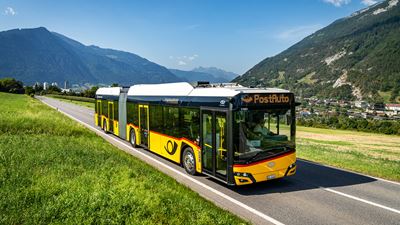
PostBus recently reached an important brand: in spring 2026, the public transport company in Balsthal (SO) brought the 200th electric Postbus into operation. By the end of this year, every tenth of Switzerland’s 2,400 Postbuses will be fossil-free. There are also growing economic reasons for the switch to alternative drive systems.
Rich Content Section
Rich Content Section
It all began on 30 November 2016 in Saas-Fee: PostBus presented its first two battery-powered buses to the media. Winter sports enthusiasts were able to use these vehicles to travel from the bus terminal to the mountain railway. Because Saas-Fee is a holiday resort without petrol-powered vehicles, the electric Postbuses were a perfect match for the village. But the technology was new 10 years ago and had its weaknesses: on the return journey from the mountain railway to the bus terminal, the drivers had to take some momentum on the slope at the youth hostel to make it.
Even in the mountains
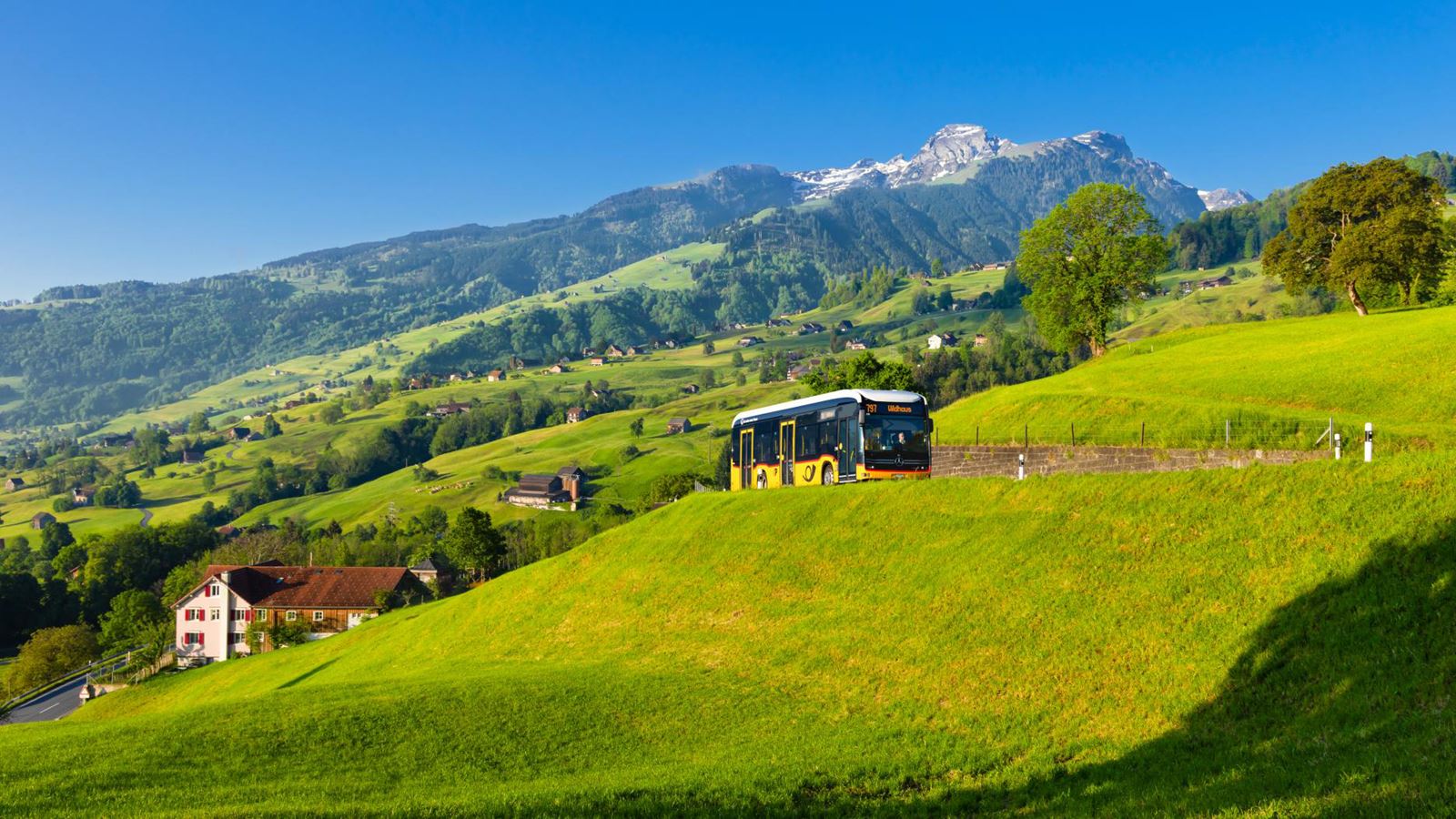
A lot has happened in e-mobility since then. Steps like those in Saas-Fee are no longer a challenge for today’s battery-powered bus models. The fleet of electric Postbuses in the Saas Valley has increased significantly, and fossil-free Postbuses are now also available in other mountain regions. This refutes the stereotype that no battery-powered buses can drive in the mountains.
A combination of various factors
From Interlaken to Winkel (ZH) and from Sion to Bellinzona: PostBus already uses battery-powered buses throughout Switzerland. The largest locations at present are Sion (20 vehicles), Oberbüren (16 vehicles) and Affoltern am Albis (13 vehicles). The fact that electric Postbuses have become the norm throughout Switzerland today is the result of consistent action and the continuous development of expertise among staff. Three cogs need to mesh to successfully put new battery-powered buses into operation:
- Vehicles: the new battery-powered buses on the market are of very high quality and reliable in daily operation. The major bus manufacturers have responded to rising demand and are investing heavily in the development of their battery-powered buses. This was clearly demonstrated in June 2026 at this year’s BUS 26 in Thun, the biennial bus conference of the Swiss Association of Public Transport (APT): all models on display were electric vehicles, and diesel buses were not found.
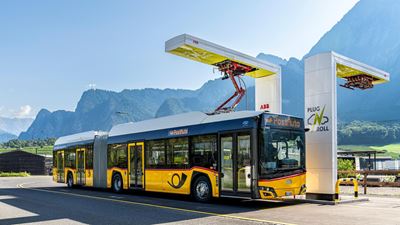
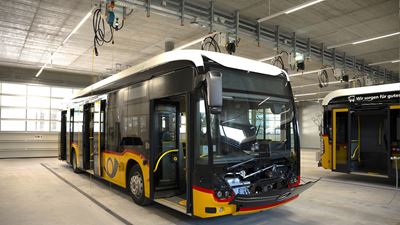
- Infrastructure: an electric bus can only run if the batteries are charged. This requires the right charging infrastructure, which cannot simply be set up overnight. It can take up to two years from the initial idea to the construction of a system to commissioning. At Swiss Post, specialists are responsible for setting up the charging infrastructure – for both Postbuses and electrically powered delivery vehicles. Swiss Post’s specialists master the challenging interplay between vehicles, charging infrastructure and energy management to ensure that every electric vehicle can be charged at the optimum time at every charging station.
- Financing: PostBus operates regional passenger transport, which is ordered and co-financed by the cantons. The transformation of the fleet cannot be implemented without financial participation by the cantons (and the Confederation) in the additional costs currently incurred for e-vehicles and charging infrastructure. The cantons have different speeds with regard to e-mobility and increasingly tight finances. As soon as the operation of diesel and electric buses costs the same, this should also have an impact on the financing of e-mobility in public transport. The abolition of the mineral tax refund for regional passenger transport from 1 January 2027 will accelerate this process.
Economic reasons are also increasingly
In the medium term, e-mobility will also be cheaper in regional passenger transport than using vehicles powered by fossil fuels. Swiss Post’s initial experience with electrically powered delivery vehicles confirms this assumption. They are already cheaper than their diesel counterparts. This is why PostBus is consistently continuing to transform its fleet into fossil-free drive systems.
Finally, the introduction of electric buses is also about people: residents, passengers and drivers alike benefit from the new battery-powered Postbuses. Because the electric Postbuses are not only low in pollutants, they are also quieter – in terms of both driving style and engine noise. This is what passengers and residents notice on PostBus routes. Drivers can also benefit from the changeover if they are driving more efficient and quieter Postbuses.